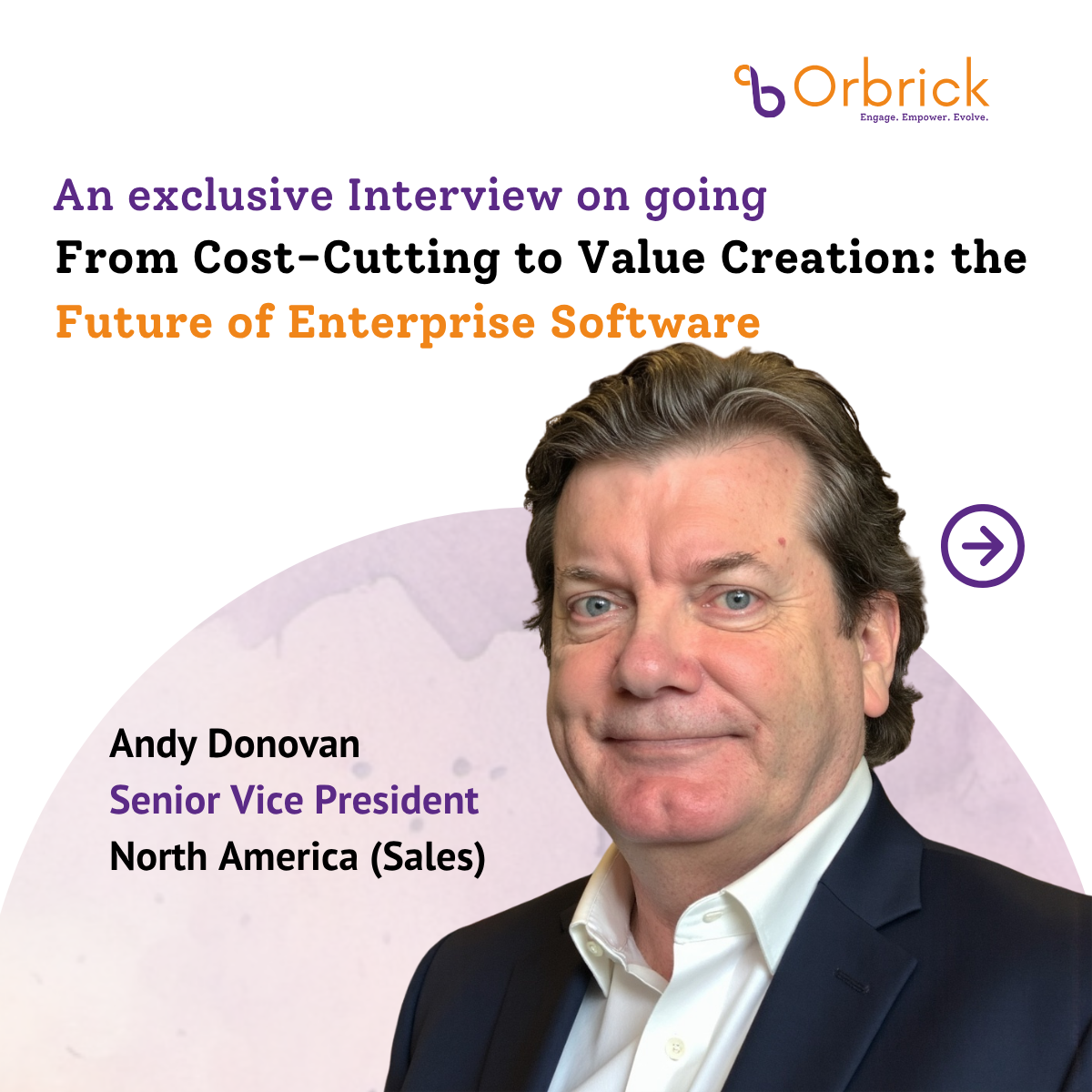
-
Andy, you’ve spent over 25 years navigating the enterprise software landscape and watching assumptions about Fusion go-lives play out. Where does it go wrong, and what does actual value maximization look like when you get it right?
Everyone talks about Governance, Executive Sponsorship, a good SI, data conversion but from my experience what brings down a Fusion project is Change Management, especially when moving from E-Business Suite. Expectations are HUGE and never met. The UI is completely different, the business process alien and you will always have the person(s) who say “We here at ABC Co Inc. don’t do things that way”. Ensure your implementor has change management in the gantt chart from day one to 60 or even 90 days post-golive.
-
You’ve advised some of the world’s largest organizations on their software strategies. In your experience, where is the most common ‘value leak’ in an Oracle Fusion implementation that most C-suite leaders completely miss?
That interesting because what they miss is believing that Fusion can do everything they need. It is a great and powerful system but when the Oracle team tells you it is all covered, ask a simple thing like “How about Treasury or Sales and Use Tax”. Once you understand Fusion can easily be 90-95% of your solution, you wont fall into the “make it work” trap.
-
What is the biggest myth regarding Oracle Fusion ROI, and how do you help clients look past the dashboard to see the real financial and quality-improvement truth of their investment?
I love this one. Oracle will build you a business case showing $20M over 5 years, with an annual investment of $2M on your Fusion subscription. No brainer, $10M ROI. Ask the team when will then come in after go-live and perform a value realization study to compare to the pre-sales business case. The business case “myth” disappears fast. That business case always shows a breakeven around year 2, rarely year 3. It takes 5+ years to get your true ROI. However, improve your business processes and 2-3 years is achievable.
-
Orbrick’s mission is to free up a billion life hours from corporate back-office work so people can put that time somewhere it matters more. You’ve spent years identifying where organizations hemorrhage capacity inside Oracle Fusion. Where do you think those hours are hiding?
Smoother, faster and more effective business processes lead to more time effective flows directly leading to hours saved. Now that not “saved” in the real sense, it means the employee can be engaged on more valuable work.
-
You are known for being a trusted advisor to executive teams. How do you bridge the gap between a CTO’s technical architecture and a CFO’s demand for measurable fiscal results or a CHRO’s people strategy for increased retention?
A CFO, CIO or CHRO do not know anything about Fusion, about Oracle terminology. They talk their language, Procure to Pay, Hire to Retire, Support costs, renewal fees etc. Always listen, know your audience and talk their language. And hugely important, answer their questions as that will earn you the right to add what you “want” them to hear afterwards.
-
With your background in the Oracle ecosystem, you could have gone anywhere. Why did you decide to join Orbrick?
Orbrick wants to make Fusion customers successful and that aligns with my own personal goal. Selling software should be 25% of a sales reps role but alas, 75% of the time they sell and move on to the next revenue generating opportunity. If only they realized that 30% of their number can be earned easily by staying involved. And can you imagine, you sell Fusion to the CFO and stay involved until they are successful then the CFO leaves. Who will he want to talk to about a new ERP in his new role?
-
After go-live (Day 1), most Oracle Fusion implementations are treated as done. You’ve seen what Day 200 looks like inside these environments. What’s usually waiting there?
Change Orders from the SI and alas the “blame game”. Oracle over sold the solution, the demo was different, the SI didnt deliver as they promised etc etc. STOP and take a look at the decisions you as the customer made or steps YOU allowed to happen. Imagine things are running behind schedule and the SI suggests moving something to phase 2 because it gets you back on schedule. Sure, but now you are here at day 200 playing catchup, the users dont have the processes they need and the ROI is not there at all. Plan, plan and then plan again and adjust accordingly but do not move the go-live. Add more resources if you need to.
-
Your career runs through contract analysis and procurement strategy (and accounting!), not just implementation advisory, customer success, or sales. That’s a different lens than most people bring to Oracle Fusion. How does it change what you look for when you walk into an organization?
It allows me to listen, absorb, analyze and then discuss. A broad and deep understanding of business processes (KEY!), of a persons role in the customers ecosystem and their problems (read the 10K) all leads to credibility and therefore a completely different conversations. Lastly, I dont care about how to fit a solution into a customers environment, I care abotu their problem and the root cause which naturally will lead to technology and the potential solution needed. Which quite often is NOT Oracle.
-
Last one – and this one is an interview tradition here. If you had a magic wand, what is one thing you dislike which you’d just “wave away”?
Good one ………….. bad losers. You cant win if you dont know how to lose.
Tag: Interview
Getting Candid with Delhivery’s retired co-founder Bhavesh Manglani on Supply Chain, ERP, AI and the future.
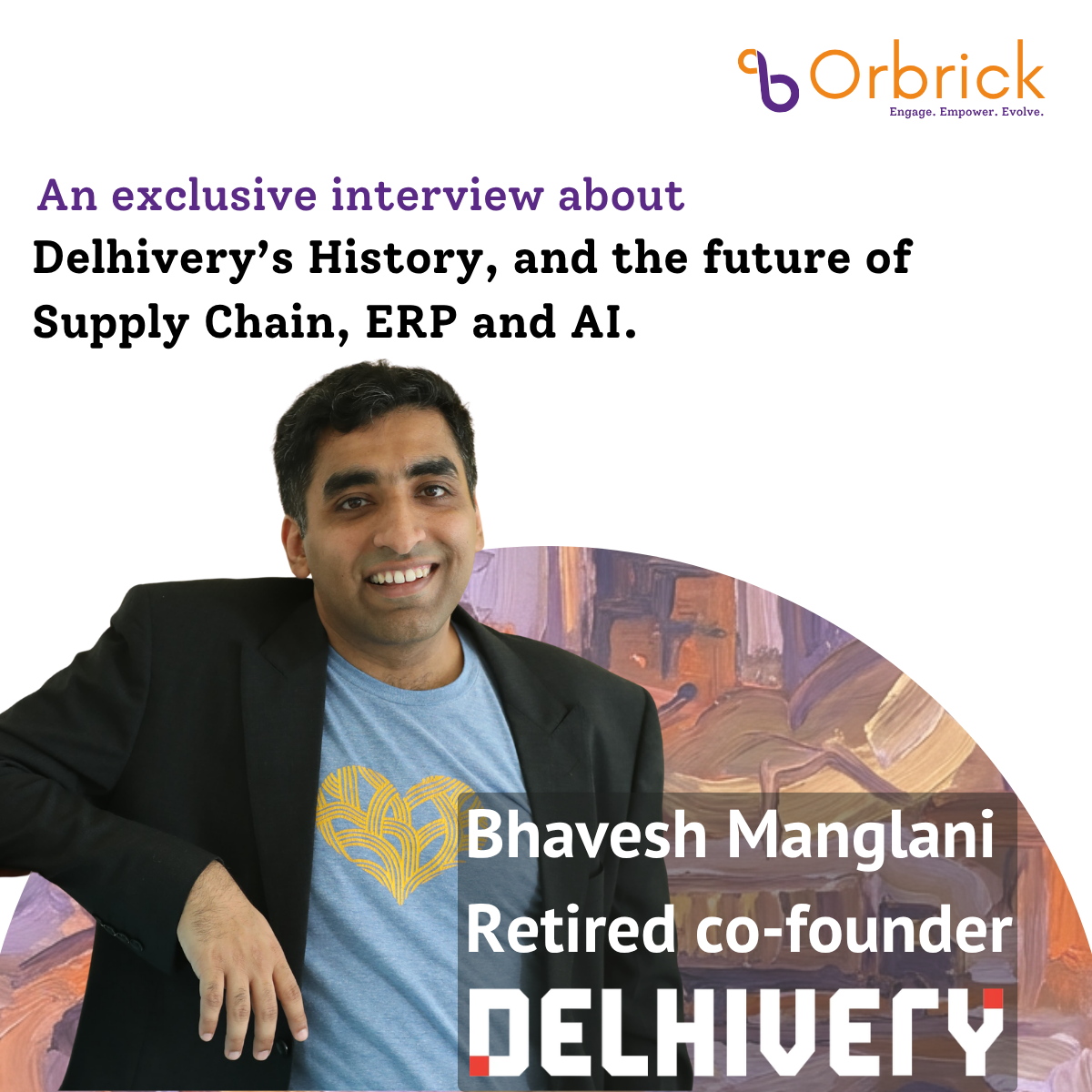
You left a stable corporate career at Idea Cellular to co-found Delhivery with four other engineers. What was the “aha moment” that made you believe India needed a completely different approach to logistics?
Having studied technology evolution at DAIICT, I was fortunate to have studied the growth of Amazon and other tech giants and the startup growth model of fast scale-up. In 2009, a year after my MBA from IIM Calcutta, I was exploring potential ideas. E-commerce in India was an untapped opportunity and logistics seemed like a clear gap. A happenstance introduction to Sahil in 2009 and a critical e-commerce purchase by my father on Indiatimes convinced me that there was no better time to pursue an opportunity in this sector. I was lucky enough to have a great set of co-founders.
Delhivery is often described as a technology-led logistics infrastructure company rather than a traditional logistics player. What are the key technology capabilities that make that distinction real?
A significant portion of the track and trace system is built in-house with a sizable technology and product team spread across the country. There are a number of NLP based systems, Addfix is one we talk about quite often as it helped us solve the incorrect pincode and poorly captured addresses by different portals. We have different systems for inter-city sorting, movement, intra-city segregation, route planning. A key part is the client panel where we offer numerous dashboards and analytics capabilities to clients of varying sizes based on their use case and requirements. Delhivery One is the latest platform that allows us to commercialize some of these capabilities which have reached a level of maturity where they can be used externally with limited training.
What are the most critical systems that run Delhivery today: TMS, WMS, OMS, AI engines?
Think of the systems like an iceberg – each and every team has their own hook into the overall technical architecture, right from finance, accounts, commercial, HR, customer support. The different operations teams have segregated UI to enable them to have meaningful actionable access to real time information. Over time, we have moved to making all systems work in real time to prevent any leakages.
Delhivery famously built its own proprietary tech stack (Nexus WMS, etc.) rather than relying solely on global ERP giants. At what scale does a company’s ‘unique complexity’ justify building over buying? How do you balance building in-house platforms vs adopting standard ERP solutions?
We were fortunate to have Kapil architect the platform – he has a great view of build vs buy, having working at large tech and product companies. Since our industry was in a state of high flux for the first 6-7 years of our existence with operational workflows changing on a weekly/monthly basis, we needed feature changes at a similar pace. Traditional ERPs at the time were lacking in such rapid development and this necessitated building one from scratch. This would not have made economic sense if the industry did not grow at the pace, it did.
In your view, what makes logistics tech fundamentally different from traditional enterprise software?
Logistics technology allows us to build controls for real world behaviour. These controls should not become impediments or increase operational cost. Also, a constraint based system may end up never be a revenue driver. As a pure cost function, it has to be scalable, reliable (99.9%+ uptime) and yet only cost a few pennies per customer transaction (AWB). The reporting requirements, internally and at client level are also heavy and can drive up costs quickly.
AI is everywhere today. But in logistics, where is it actually delivering value beyond buzzwords?
Customer delight can be considerably enhanced with use of AI. Sorting based on the product description, address correction, failure prediction are strong use cases where AI can bring meaningful improvement. The amount of communication internally and with clients is humungous – AI can declutter this and also allow for node based accountability without a rigid centralized rule engine (which has too many edge case failures).
India’s logistics complexity is unmatched: infrastructure, variability, fragmentation. What is the biggest India-specific challenge that tech still hasn’t solved?
Intra-city ETA can vary drastically based on uncertainties (rain, fog, public events). Due to heavy congestion in almost all the top 20-30 cities even on a good day, this is a ‘hard to build for‘ problem, especially when a typical delivery person is delivering 30-50 parcel in a single trip and may stop at more than 15 locations per trip.
What leadership lessons did you learn building one of India’s largest logistics networks?
Working with a large workforce with an income potential of a lower-middle income family is a humbling experience. Personnel decisions have far-reaching impact, beyond the immediate as many are supporting large families back home.
At a leadership level, my key insights can be summarized in the following:
- Work to solve problems that aren’t popular.
- Leadership is a lifelong pursuit.
- Pilots & trials are a great way to foster innovation.
- We are united by our culture, the values that we stand for.
If you were advising a large enterprise implementing Oracle/SAP supply chain today, what should they do differently to avoid becoming slow while the market becomes real-time?
Not all CTOs are conversant with proprietary tools. Companies are not averse to paying for software that gives results and is flexible. The key challenge sometimes is lack of timely technology support to build features fast. Selling modules and tools with long term licenses is great if one is able to handhold and help bring results. Whenever we buy a tool, we spend considerably energy in looking for small software firms which have implementation expertise as it is hard to build these capabilities in house for tools like Oracle/SAP.
You have transitioned from day-to-day operations to mentoring and investing. What is the one ‘unsolved problem’ in Indian logistics that you are waiting for a new founder to pitch to you?
India has a large well connected railway network (inter and intra city). This has immense potential for reducing cost, increasing reliability and speed of logistics. It is a massive opportunity waiting to be tapped.
You’ve built Transport One and OS One as cloud-native SaaS platforms, yet your core financial ERP was traditionally on-premise SAP. How do you think about the cloud-versus-on-premise decision differently for customer-facing logistics software versus internal financial systems?
OS One is the culmination of years of technology development and an answer to unsolved problems in logistics tools available to companies. A Saas model offers a more plug and play adoption opportunity with reduced requirement to maintain infrastructure and uptime (a challenge for logistics companies as the systems they run age). Cloud vs On-Prem is a classic dilemma and the answer is very much dependent on the use case, in house technical capabilities, ability to pay upfront for and commit to infrastructure. Internal financial systems can be more centralized and are more amenable to On-Prem if the costs are more reasonable.
What’s the next frontier for you personally?
I have had the good fortune to have been a key part of an exciting journey to birth a national level logistics enterprise. I am a techno-optimist and believe that the world is yet to see significant improvement in quality of life through technology adoption. My interests are diverse and while I recharge with some quality time with family and a focus on improving health, I explore problems which improve sustainability and impact community living.
Finally, a customary question we always ask: If you had a magic wand, what is the one thing you really dislike and you’d just “wave away”?
A full day’s honest work should earn a living wage. Dignity of labour and life reflects on a society’s values. These two are still a work in progress in our industry and as a country.